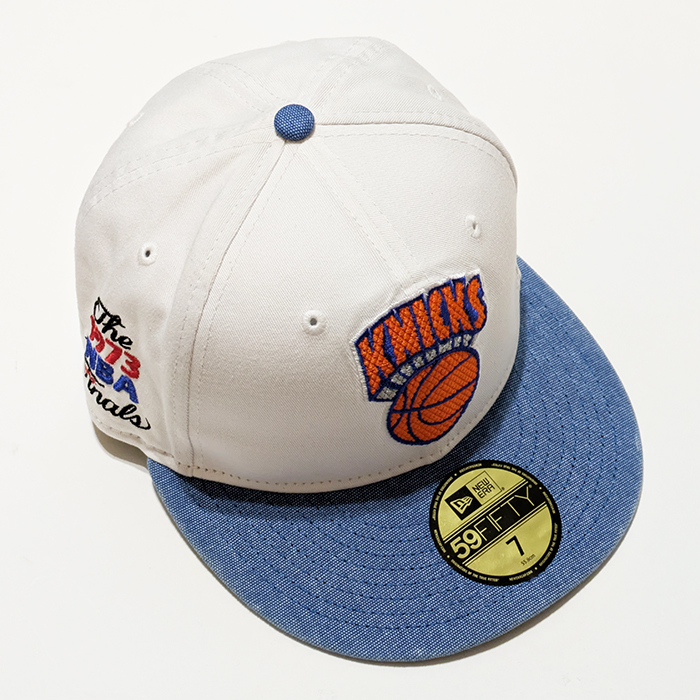
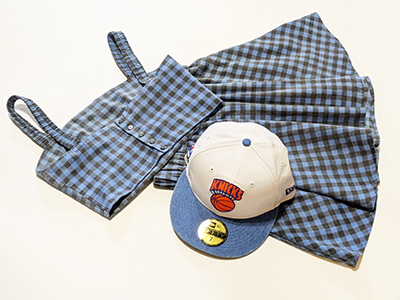
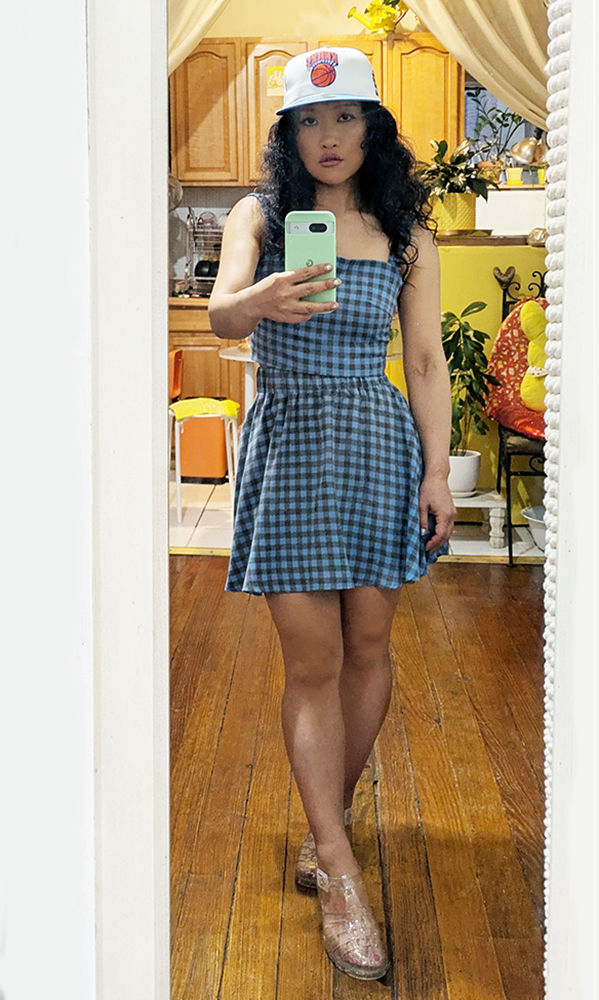
This June, I got a new Knicks fitted hat from New Era, but I didn’t have an outfit to go with it. The thought process behind making a new outfit with sustainability in mind includes using up my raw-material inventory, altering a pattern I’ve made in the past, and reminiscing about NYC. Nevertheless, I usually end up practicing sustainable sewing without even trying.
1. Picking out the fabric
I wanted to make something with washed denim to match the brim. Before going out to buy new fabric, I always check to see if I already have the kind of fabric I want in my inventory. This time, I didn’t have it. I usually don’t. But I still try to make something happen with what I already have so that I can completely eliminate waste.
Fabric from Save-A-Thon, a quintessential NYC store
In my inventory, there was this 100% cotton plaid fabric from Save-A-Thon, a store that used to carry fabrics, art supplies, sewing machines, vacuum cleaners, and other household items—comparable to Joann’s or Michaels. Save-A-Thon used to be at every outdoor mall in New York. I frequented Save-A-Thon on Bridge Street on Fulton Mall in Downtown Brooklyn before it closed its doors.
I bought this fabric sometime in the 2000s when they were having closeout sales. Because it was being sold at an extremely reduced price for a cotton fabric, I bought many yards of it and used some of it as bedding at the time. I made some clothes, pillow cases, teddy bears, couch covers, and some other things with it. Among a variety of purposes, I used some of it as picnic sheets.
Washed and faded picnic sheet
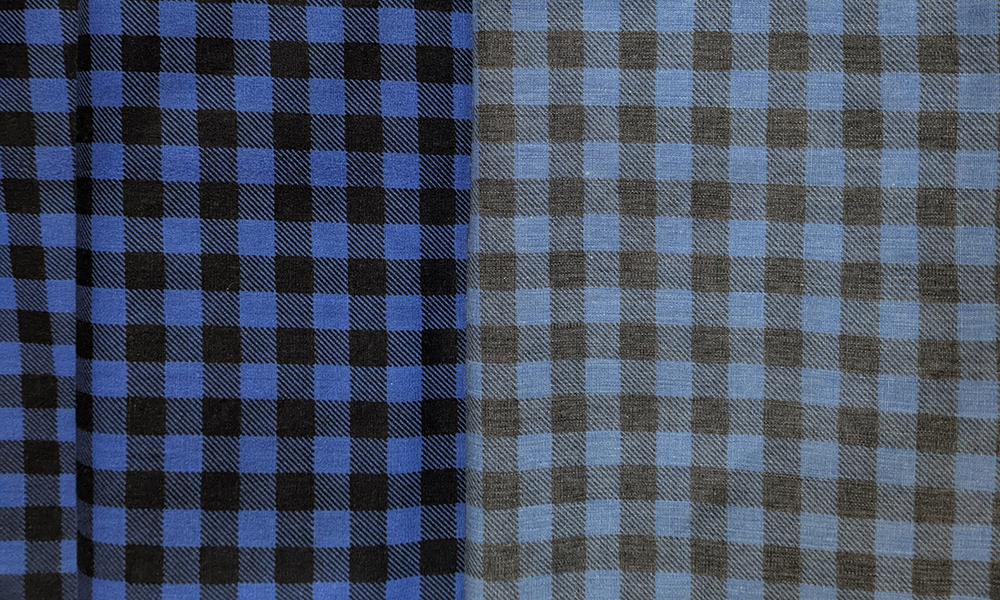
The thing about this fabric was that it was just like denim. After several years with numerous washes, the blue and black color dyes faded. I still had the brand-new portion of this fabric in my inventory, but it was not the color I was looking for. However, the piece I have used as a picnic sheet for several years had faded to the perfect tone to match the new hat.
Left: new fabric; right: washed and faded fabric—not the wrong side of the fabric.
2. Designing and making the outfit
I’ve made a lot of one-piece dresses over the years between 2004 and 2016. Sometimes dresses are literally dressier and more suited than two-piece sets for certain situations. But for the past 10 years, I’ve preferred to make a separate top and bottom whenever I can, and wear them together to create the look of a dress. Making separates is more sustainable in the long run. Each piece can be worn with other tops or the bottoms. Also, you can wash just the top more frequently. So, instead of making a dress, turning it into two pieces was the way to go.
Designing as you sew
For this outfit, I made an alteration to a pattern I made two years ago for the Halloween outfit. This is the type of top I like for the mid-2020s—very simple, not too tight, not sexy, short, and covered-up.
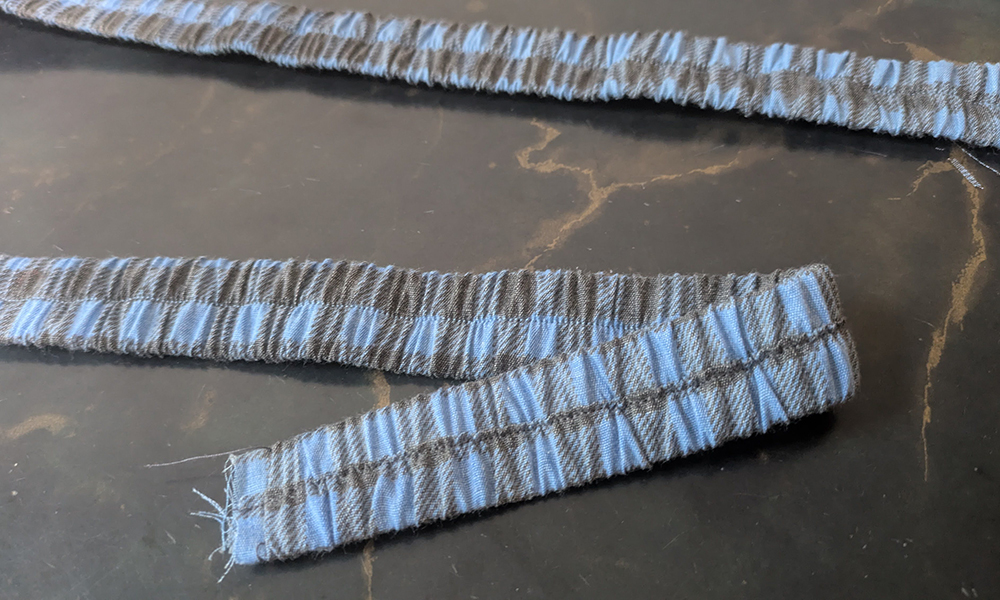
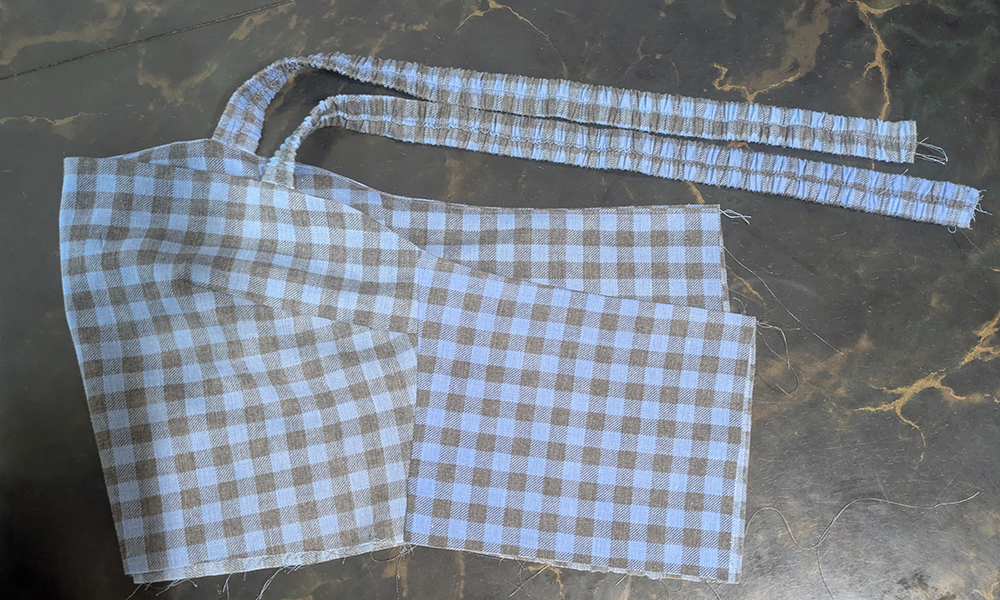
This time, I made an elastic shoulder strap using the same fabric. To make an excellent elastic band with gathers evenly distributed like this one, you need three hands. I always use my left foot as my third hand for this kind of operation. You need three hands because two hands need to stretch the each end, while the other hand needs to pin the fabric and the inner elastic piece together.
Elastic shoulder strap
Connecting shoulder straps to the bodice
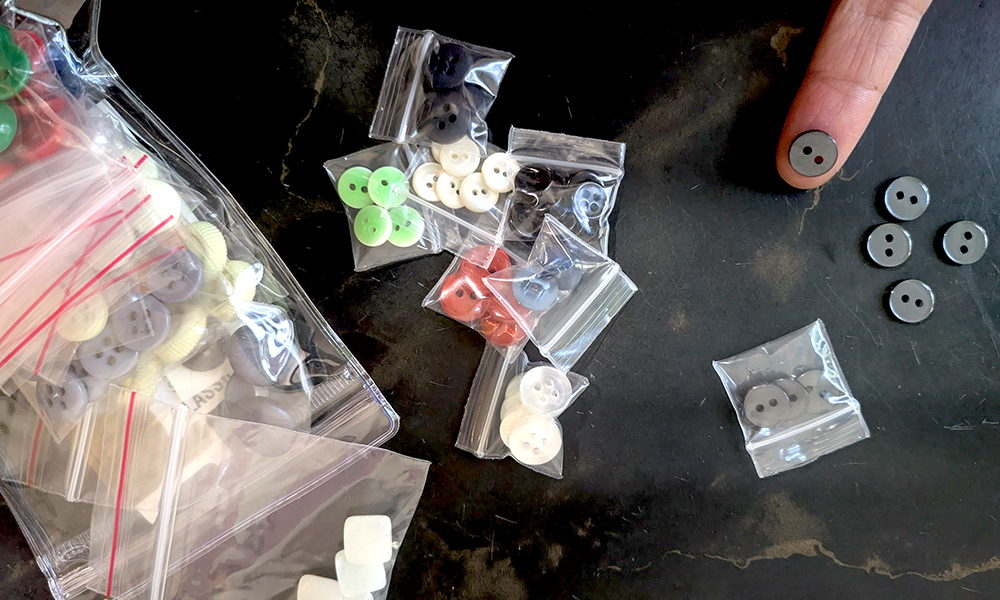
Choosing buttons from my inventory for the back closure. The gray buttons matched the faded black dye perfectly.
I made the top with doubled fabric, using the same fabric as the lining because it was a little too soft to be made into this kind of top. Also, doubling the fabric was easier, faster, and would have looked better than binding the edges.
For the bottom, I made a simple elastic-waist skirt without a closure. I also added a pocket on each side. The outfit was made in the perfect color through effortless upcycling.
♡ I published a book that illustrates fashion trends and social change in Brooklyn, NY. It contains photos of the clothes I made over two decades. The photos are self-portrait—not casual selfies like the photo above—focusing on the outfits. You can find more info HERE. A print edition is now available as well.